
Finding Greenville Residents
Greenville does not have one official roll of every household. The useful trail changes with the identifier in hand. An address usually starts with a Pitt County parcel. A name tied to a deed starts with the Register of Deeds. A past household belongs in a dated directory, census record, or archive collection. A court or voter result is a different kind of evidence and has separate limits. Match the source to the question before treating a name match as a connection.
Use two independent records whenever possible. A parcel may show a current owner while tax mail goes elsewhere. A deed shows parties to an instrument, not who occupied a home. A historical directory can place a household at an address for its publication year, but not today. That distinction makes a Greenville residents directory more useful and less likely to blur separate people with the same name.
- Start with a known Greenville address or full name in Pitt County OPIS. Note the parcel number, NCPIN, situs address, mailing address, and legal description.
- Use the parcel's deed reference or party name in the Register of Deeds index. Record the filing date and book/page before moving backward.
- For a public court matter, search the NC eCourts Portal by party name or case number, then use the Pitt clerk for an official copy.
- For a historical household, cite the exact DigitalNC directory volume and page, then pair it with a map, census, cemetery, or Archives record.
- Ask the custodian for a narrow record type, year, and identifier when a needed item is not online. Chapter 132 does not require an office to create a new compiled resident list.
Greenville Resident Records Offices
Three Pitt County offices handle most current Greenville record handoffs. The Register of Deeds keeps land instruments and county vital functions. Land Records maintains the tax and parcel layer. Elections directs voter searches through the state system. Court files belong with the clerk, not with the Register. The office cards provide a starting point; a request still needs a record type and an approximate date.
Pitt County Register of Deeds
100 E First Street
Greenville, NC 27834
252-902-1650
Pitt County Land Records
110 Evans Street
Greenville, NC
252-902-3380
Pitt County Board of Elections
1800 N Greene Street, Suite C
Greenville, NC 27834
252-902-3300
Real-estate records are also available at 1717 W Fifth Street, and the county lists historic index books onsite. The streets, parcel tools, and address distinctions belong in the fuller Greenville street directory workflow.
Greenville Parcels in Pitt OPIS
Pitt OPIS is a parcel and assessment tool. Its owner search accepts a last name followed by a first name, generally in LAST, FIRST form. It also accepts an address, a five-digit parcel number, and a ten-digit NCPIN. Opening Details after a result is important because that card can show owner names, a physical or situs address, tax mailing address, legal description, acreage, values, and map layers. A current owner field does not prove that the owner lives at the parcel.
GreenvilleLink's public layer service places city and county address points, tax parcels, streets, ZIP layers, districts, and other local geography beside one another. Its map is a useful place check, but coordinates are approximate and individual layers update on their own schedules.
| OPIS field | Input shape | What it helps confirm |
|---|---|---|
| Owner | Last name, first name | Tax ownership candidates |
| Parcel number | Five digits | One parcel identifier |
| NCPIN | Ten digits | Geographic parcel identifier |
| Address | Address point selection | Underlying parcel |
| Advanced criteria | Value, neighborhood, acreage | Parcel filtering, not household search |
See the GreenvilleLink layer view before treating an address as one jurisdiction or one boundary.
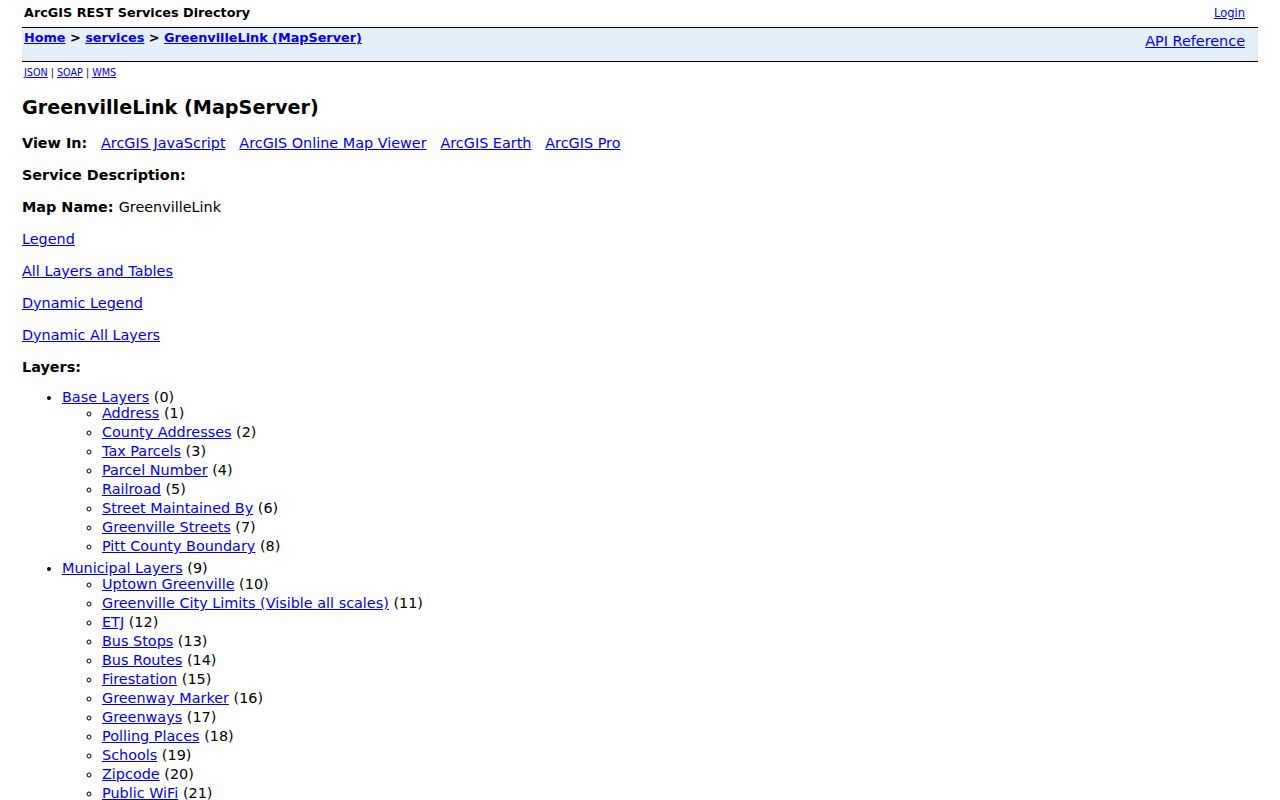
The layered view helps separate a city address point from a county parcel and a postal ZIP label. Those are related records, not interchangeable proof of residence.
Greenville Deed Party Trails
The free guest route to the Pitt Register of Deeds is an index, not a general people finder. Its land-record search supports Grantor, Grantee, Document Type, Book/Page, and Date Range. The county states that online real-estate indexing reaches from September 1762 to the present, while historic index books remain onsite. Deeds, deeds of trust, mortgages, plats, surveys, releases, easements, and restrictive covenants can establish a dated property connection.
A result can list Date Filed, Index, Type, Grantor, Grantee, Description, File Number, Book/Page, Ref, Amount, and Images. The description column is expressly marked “Not Warranted.” Read the instrument and follow the legal description rather than assuming a short index description is a modern street match. The register also promotes PropertyCheck, a name-and-address notification service, but it does not replace checking the actual index.
The Pitt guest land-record search is the source of this index view.
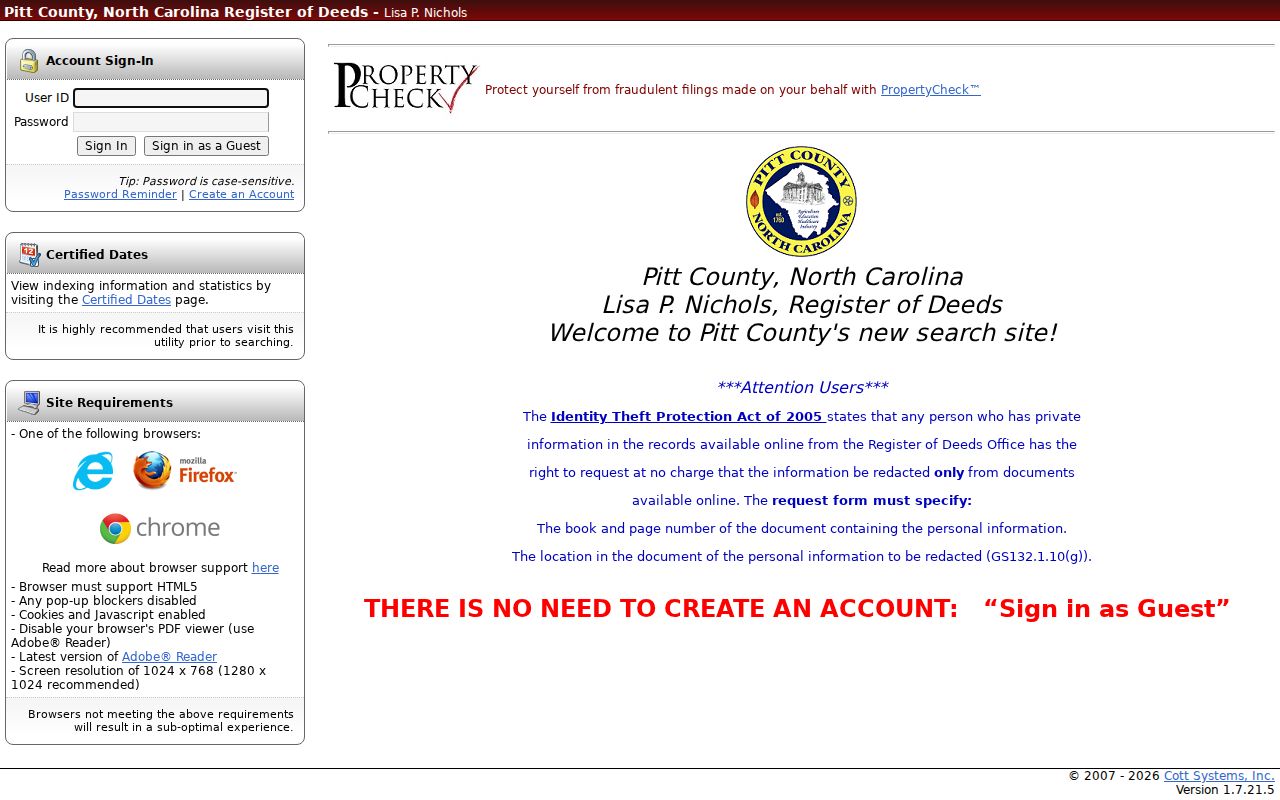
Book/page, party, type, and filed date make the index useful for a dated record trail. They do not establish a person's current household.
Greenville Voter Lookup Fields
North Carolina's voter search requires first name, last name, and a voter-status choice. Middle initial, year of birth, and county are optional ways to narrow a Greenville result. The public record can show county, status, return status, and voter history such as election, voting method, and voting county. It does not show a candidate choice. A historical or public data request follows its own fields and exclusions.
| Required fields | First name, last name, and Registered or Removed/Denied status |
|---|---|
| Optional narrowing | Middle initial, year of birth, and Pitt County |
| Public history | Election, voted method, voted county, primary ballot |
| Protected material | Full date of birth, SSN, driver-license data, some email and protected addresses |
The NC SBE voter-search form shows the current name and filter controls.
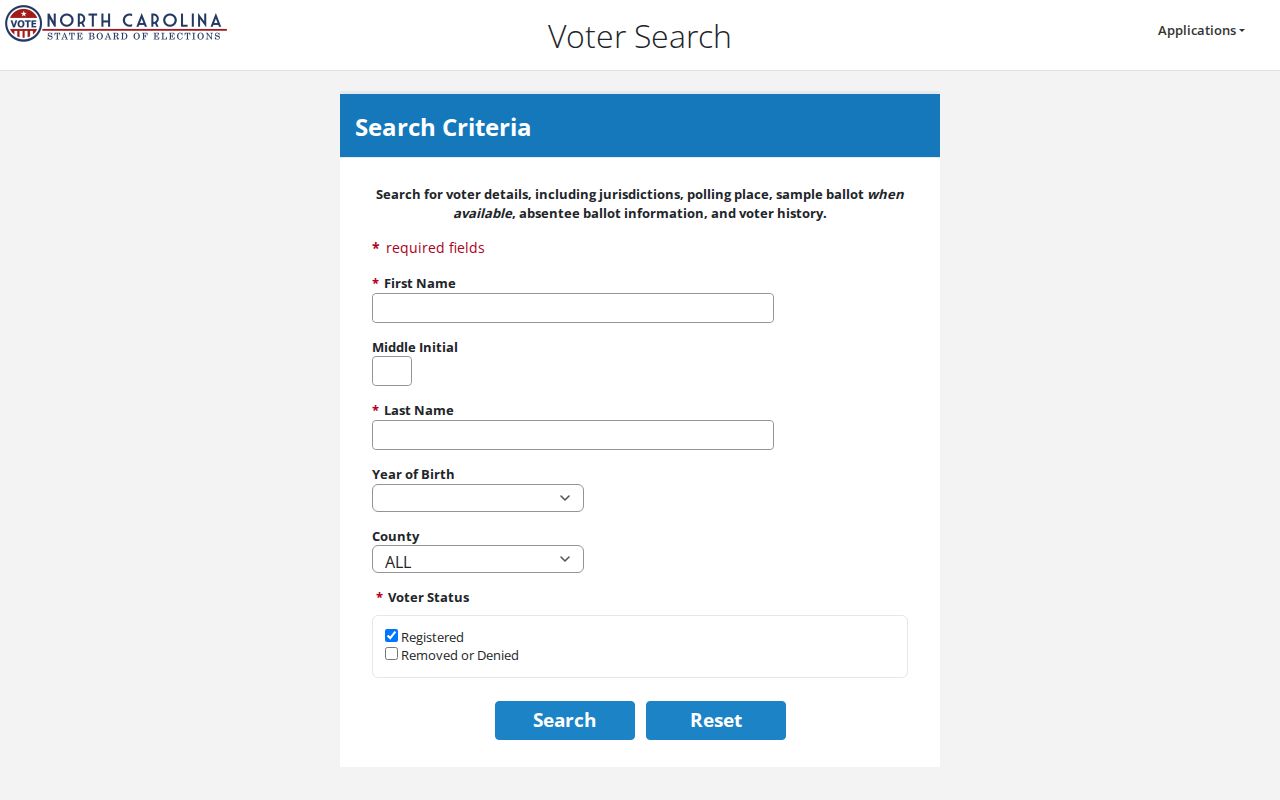
Use a voter result as a record of registration and activity history, not as an open invitation to republish sensitive details or infer current presence.
Note: Pitt's inspected historical-data page was under construction and described a ten-business-day service estimate, not a deadline set by law.
Current Greenville Resident Rolls
Each current Greenville directory-like source answers a narrower question. The parcel roll is strongest for an ownership and legal-description question. Voter search concerns registration status and public voter history. The deed index identifies instrument parties. Court records identify public case parties when a record is open. None of these sources is a complete roster of everyone who lives in Greenville.
| Record source | Question it answers | Custodian | Access route |
|---|---|---|---|
| OPIS parcel roll | Current owner, parcel, situs, mailing | Pitt Land Records | Public map, office, phone or request |
| Deed index | Party to a land instrument | Register of Deeds | Guest index, historic books, counter |
| Voter search | Registration status and allowed history fields | NC SBE / Pitt Elections | State lookup, data request, elections counter |
| eCourts | Public case party and case status | Judicial Branch / Pitt clerk | Portal, terminal, clerk copy route |
| City directories | Dated historical household entry | DigitalNC and local repositories | Scan, library desk, Archives |
A one-person question needs the same discipline. The Greenville resident lookup page focuses on verifying a person across separate custodians rather than combining unrelated names.
Greenville Court Name Searches
Pitt County is in Judicial District 3. NC eCourts Smart Search can begin with Party Name or Case Number. Advanced categories include Civil Actions, Special Proceedings, Estates, and Criminal Actions. A last-name query generally needs at least three characters plus a wildcard, while a case-number prefix may be broadened with a four-character prefix and an asterisk. Punctuation and search type can affect results, so a name should be paired with county, category, or year whenever possible.
Public results can show case number, parties, case information, events, dispositions, hearings, and financial information where applicable. Some documents remain sealed, confidential, restricted, juvenile, protective-order material, or an unreturned warrant. The Portal is convenient but it is not the official court record. Pitt clerk terminals can search public files, and the clerk provides copies for the applicable fee.
The public NC eCourts Portal supplies the search route illustrated here.
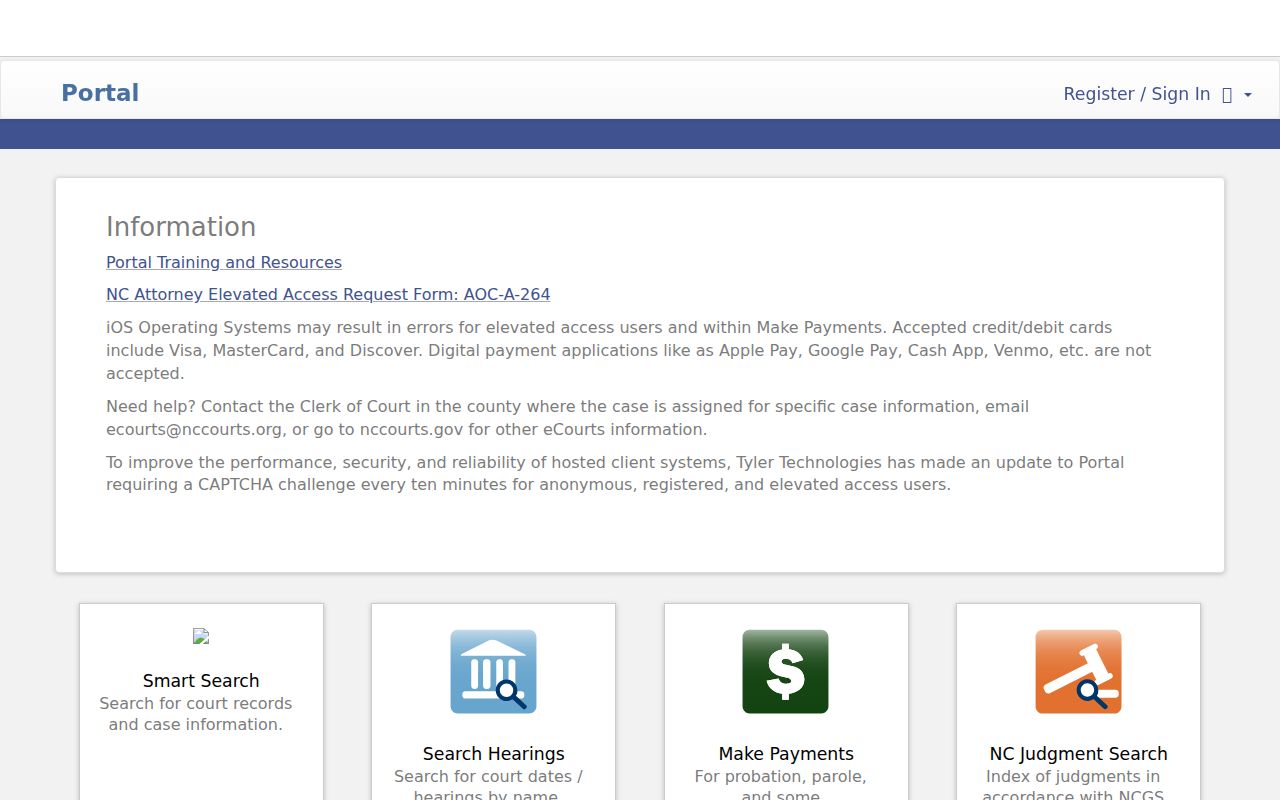
Use the portal to locate a public case, then contact the clerk for an official copy or a record that is not available online.
Greenville Certificate Access
Vital certificates are not an open Greenville resident index. Pitt's Register of Deeds handles county birth and death certificates and marriage licenses within its jurisdiction. North Carolina Vital Records holds births from 1913, deaths from 1930, marriages from 1962, and divorces from 1958 to the present. Certified copies generally require a qualifying relationship, legal need, or other authorized role. Older material may require the State Archives or a county route.
North Carolina uses eligibility rules, especially for birth data under N.C.G.S. 130A-93, rather than one simple public-release clock. A three-year search through the state office is listed at $24. State Archives holds death certificates from 1913 through 1975, but that does not make every historical record a searchable online name result.
The North Carolina Vital Records order page shows the certificate and relationship-oriented order process.
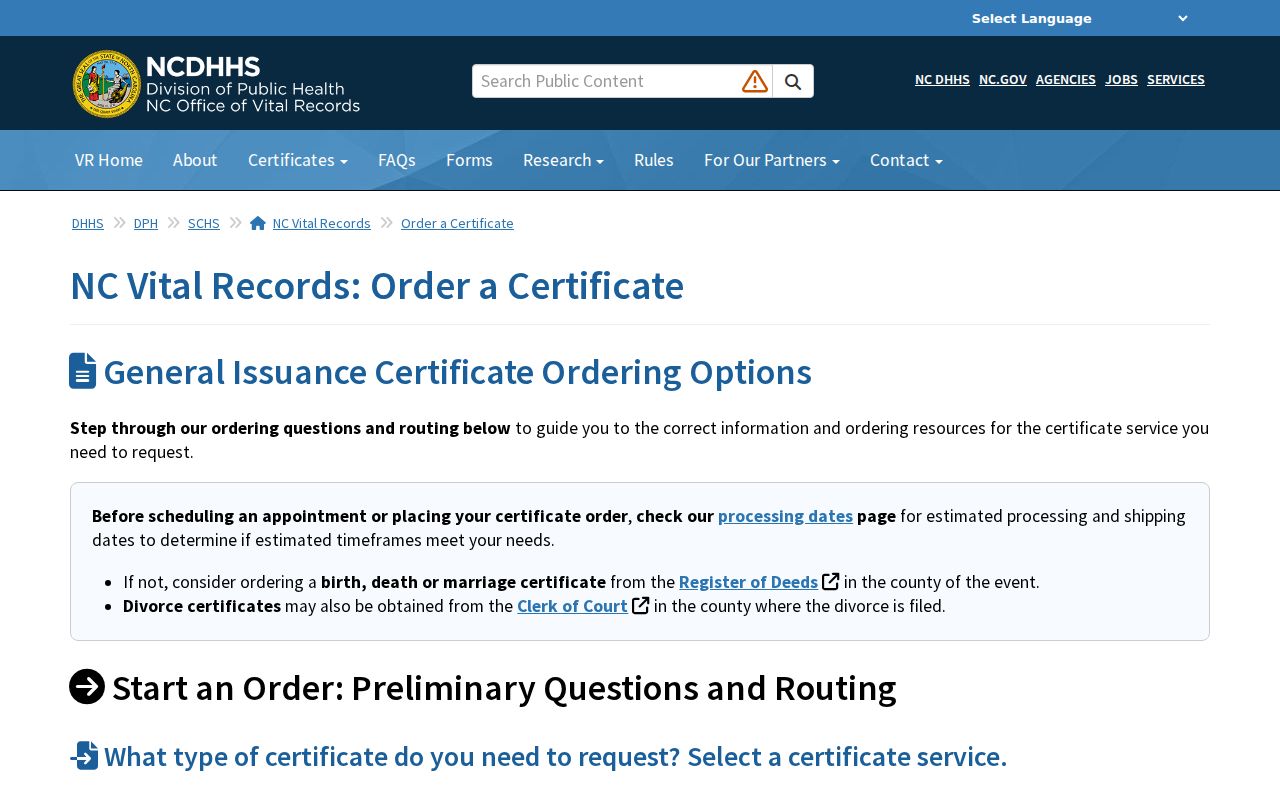
The form is a request channel, not a public directory. Give the custodian the record type, date, county, and relationship information it requires.
Greenville Library Research Shelves
Sheppard Memorial Library at 530 Evans Street connects researchers to its catalog, Digital Resources, NewsBank access for The Daily Reflector, NC LIVE, and reference help. Its public hours listed during research were Monday through Thursday 9-7, Friday 9-5, and Saturday 9-2, but current hours should be confirmed. January 2025 minutes discussed a possible local-history-room name change, so ask staff about current directory, obituary, newspaper, and house-history holdings rather than assuming a room label.
The Pitt County Historical Society's Chronicles supplies another local route. Volume I has about 1,100 Pitt families and more than 42,000 indexed names; Volume II has more than 1,200 articles and photos with more than 33,000 indexed names. Those family-history leads still need an independent deed, directory, cemetery, newspaper, or Archives check.
Greenville Address Labels Matter
A Greenville parcel can have a situs address, a tax mailing address, a legal description, an NCPIN, a ZIP label, and a city or county jurisdiction. These are not duplicate ways to say the same thing. The tax bill may go elsewhere. City of Greenville addressing applies inside city jurisdiction; Pitt Planning handles E-911 addressing outside it. ZIP boundaries and Census statistical areas do not automatically match city limits or parcels.
- Parcel
- A defined tract in the tax and map system, commonly tied to a parcel number or NCPIN.
- Situs address
- The physical location assigned to a parcel, distinct from a tax mailing address.
- Index
- A locator list of record fields, such as parties, book/page, and date, rather than the full official record.
- Criss-cross directory
- A reverse address-style directory, if a repository has one, that should be verified by its year and scope.
Greenville's street grid uses Greene, Evans, and First as reference streets, with odd and even sides organized by direction. Older records can also reflect annexation and later street-name changes. A dated street and the legal description are stronger together than either one alone.
Greenville Protected Record Boundaries
North Carolina's Public Records Act gives broad inspection and copy rights, but it does not erase confidentiality rules or require an agency to create a new resident compilation. Sealed court material, protected voter fields, current certificate restrictions, adoption records, and confidential addresses remain outside an ordinary lookup. The original office can explain an available counter, phone, mail, or request route when an online screen is incomplete.
The North Carolina Address Confidentiality Program gives qualifying survivors a substitute address and can support voter-address confidentiality. N.C.G.S. 132-1.10 provides a redaction route for certain sensitive identifiers in accessible land and court images. Contact the custodian, identify the book/page and data location, and never try to reverse a protected address.
Dating Greenville Record Results
Greenville research is most reliable when each result carries three dates: the underlying record date, the source's coverage or update statement, and the date it was accessed. A deed index may reach to September 1762 while historic books still require an onsite visit. A city permit layer can refresh daily at 5 a.m. while permit records are retained for six years. The statewide eCourts rollout made a current portal route available, yet older paper and official-copy work remains with the clerk.
That contrast is practical, not academic. A current map layer should not rewrite a historical deed or directory. A missing city cemetery entry before October 1984 may reflect the city's stated unmarked or unrecorded-grave gap, not a conclusion about burial. For an older Greenville household, pair the directory year with a Sanborn sheet, cemetery, census, or Archives record and state precisely what each source supports.
Note: A record date and a search date are different facts, so preserve both whenever a Greenville residents directory result is saved or cited.
Historic Greenville Resident Directories
For a past Greenville household, printed directory scans can be more direct than a current database. Verified Greenville or Pitt runs include 1916-17, 1926-27, 1940-41, 1942-43, and 1960-61. The 1926-27 volume credits Ernest H. Miller and Commercial Service Co.; the 1942-43 scan credits Southern Directory Company. An entry can carry a name, spouse notation, occupation, a historical street address, and marks such as h or r. Read the volume's own abbreviation key instead of expanding initials by guesswork.
DigitalNC's city-directory collection offers the online route. Sheppard Memorial Library, the Pitt County Historical Society, and State Archives add reference, newspaper, map, cemetery, and family-history channels. The longer treatment of the volumes, entry reading, and exact citations is on the Greenville city directories page.