
Greenville Directory Volumes
Five Greenville/Pitt volumes have a verified public route. They do not make a continuous run, but each gives a dated look at local names and addresses. DigitalNC describes its statewide city-directory collection as broadly representing volumes published before 1968. Its listings can include an address, occupation, spouse, race, renter or owner notation, and nearby residents. Those are historical conventions in a printed source, not confirmation of a current fact.
| Collections | Years | Where Held | Access |
|---|---|---|---|
| Greenville/Pitt directory | 1916-17 | DigitalNC | Online page images and introductory material |
| Ernest H. Miller, Commercial Service Co. | 1926-27 | DigitalNC, contributed by UNC-Chapel Hill Wilson Special Collections | Online record 25606; call number C971.74 G81m v.2 |
| Greenville/Pitt directory | 1940-41 | DigitalNC | Online scan with municipal-library and city-facts context |
| Southern Directory Company | 1942-43 | DigitalNC | Online scan with civic and institutional listings |
| Greenville/Pitt directory | 1960-61 | DigitalNC | Online scan with later city facts |
A 1958-59 Miller-era volume is not listed here because the research did not verify an official DigitalNC landing record for it. A missing year is a collection gap, not proof that a household vanished, moved, or that no volume was printed. Start with a verified edition and record its page or image number.
Digital Greenville Directory Scans
Use the DigitalNC collection to find a volume, then use the Greenville or Pitt County search terms and open the actual record. The 1926-27 record identifies Ernest H. Miller and Commercial Service Co. as creator and publisher. The 1942-43 Southern Directory Company volume adds a useful layer of context through its listings for government, associations, churches, colleges, clubs, hospitals, libraries, schools, and parks. Cite the volume and the page image, rather than citing a search result alone.
Digital access is only one channel. Scans may be easier to search or enlarge, but they can also show an incomplete run. The volume itself is the authority for its spelling and abbreviations. If a page is hard to read, preserve the printed wording in a research note and compare it with the title page or the volume’s abbreviation key. Note: An address in a Greenville directory fixes a person to that edition’s date, not to a permanent residence.
Sheppard's Greenville Research Desk
Sheppard Memorial Library is the local starting point for directory, newspaper, obituary, microfilm, cemetery, and house-history questions. It is at 530 Evans Street in Greenville and lists 252-329-4580. The library site shows public hours of Monday through Thursday 9-7, Friday 9-5, and Saturday 9-2; confirm hours before a visit. Its catalog and Digital Resources also point users to The Daily Reflector through NewsBank and to NC LIVE, where access conditions can apply. Ask by phone, email, or at the reference desk about locally held material.
The Sheppard Memorial Library catalog and Digital Resources entry point is shown below.
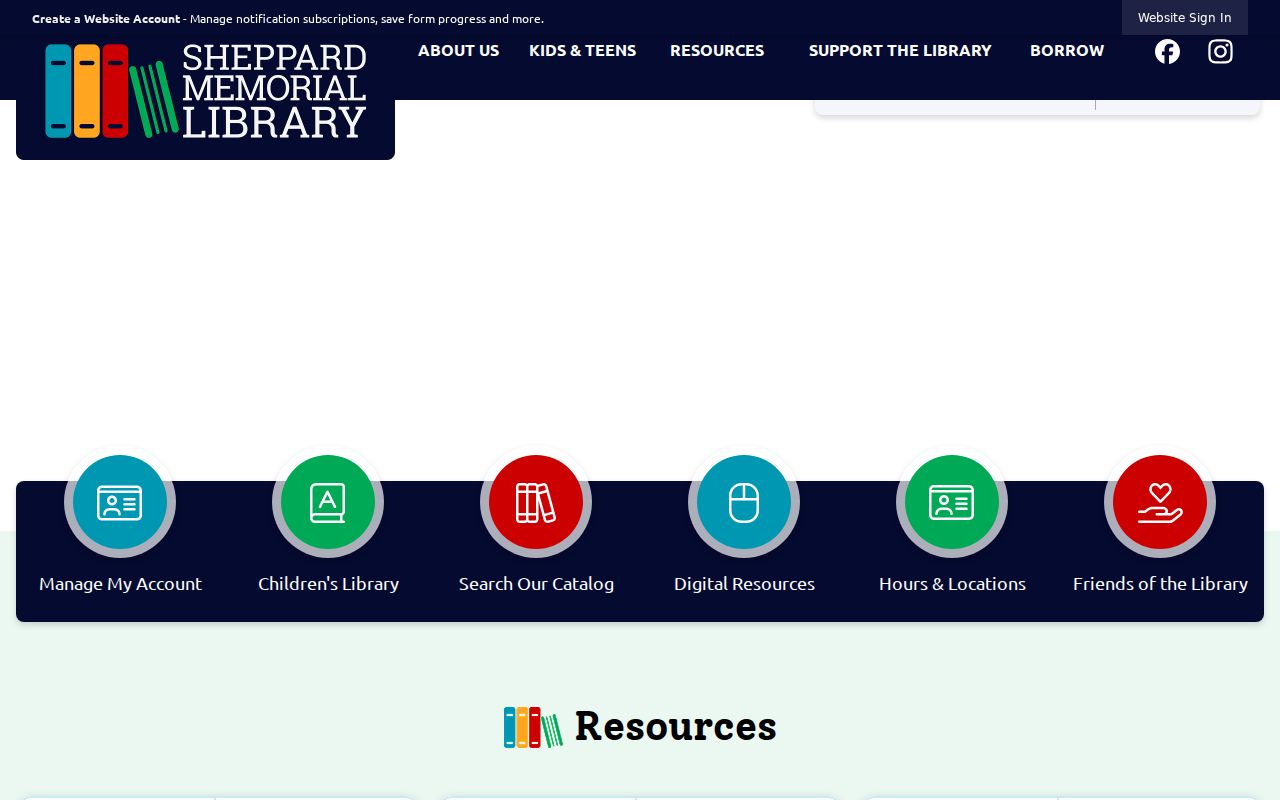
Ask the reference desk which directory volumes, newspapers, and microfilm can be consulted now. Library minutes from January 2025 discussed renaming the Local History Room to the Greg H. Needham History Room, so the current room name and holdings should be confirmed with staff rather than assumed.
Reading Greenville Directory Entries
A listing needs to be read as a compact, dated statement. The inspected Greenville-style entries place surname and abbreviated given name first, then may put a spouse in parentheses, add an occupation and employer, and end with a street address. Parentheses are useful when two people share a name, but they are not a reason to turn initials into a fuller name without another source. Historical language, spelling, racial classifications, and ownership notation should remain in their period context.
| Name line | Surname and abbreviated given names; keep initials as printed until another record confirms them. |
|---|---|
| Spouse parentheses | A spouse can appear in parentheses, which can separate people with similar names. |
| Work line | The historic occupation and sometimes an employer, recorded for that edition. |
| Address and marks | House number and street; the inspected entries use h for home and r for a residence or renter notation. |
| Ownership notation | Any owner or renter mark is the source’s historical assertion, not a current land-record finding. |
Read the abbreviation key in the same volume before expanding a mark. The research supports h as home and reports r as a residence or renter notation. It does not support guessing different expansions from a similar-looking entry. A business address can differ from the home address, so record which address the entry actually prints.
- Criss-cross directory
- An address-ordered section of a directory, if a volume contains one. No official public Greenville run has been verified, so ask library staff about a specific year.
- Householder index
- A name index organized around household heads when a volume supplies one; it is not a substitute for checking the printed entry.
- Abbreviation key
- The volume’s own explanation of marks and shortened words. Photograph or note it before interpreting an entry.
Note: The exact key in the individual volume controls the meaning of its abbreviations and marks.
Greenville Reverse Listings Need Proof
Do not assume an online reverse or criss-cross directory exists for a particular Greenville year. Research did not locate an official public inventory of a complete Greenville reverse-directory run, nor a complete official obituary-index inventory. A street-order lookup can be valuable when it is actually in the book, but it should be labeled by volume and page. Otherwise, ask Sheppard reference staff before treating a modern search result or an undated list as a historical address source.
This is a useful correction to a common assumption: an alphabetical directory and a reverse directory answer different questions. The alphabetical section starts with a name. An address-ordered section starts with a location. When neither is verified, use the regular entry, nearby lines, a map, and an independent dated record instead of filling the gap with a claimed reverse listing.
Maps Behind Greenville Directory Addresses
Old street shorthand becomes more useful when paired with a map from the same era. The Library of Congress makes a four-sheet May 1896 Greenville Sanborn map and a twelve-sheet May 1916 Greenville Sanborn map available as public-domain images. They show buildings and land use, not a complete occupant roll. Compare a named business, block, institution, or street spelling with an edition that is close in date.
Greenville’s present street-numbering code uses Greene, Evans, and First as reference streets. An entry such as E 3d can therefore be checked against the city’s reference-street logic, a current address point, and a historical map without claiming the old number is unchanged. Growth and later annexation also matter: a place labeled Greenville in a historic source may have had a different city-limit status at that date.
Note: A Sanborn sheet documents buildings and land use, so pair it with a dated listing before naming an occupant.
Trace Greenville Households
Move through the verified editions one at a time. Start with the latest relevant volume, copy the name exactly, and note the address, spouse, occupation, and any business line. Then step back to the next verified edition. A changed spelling deserves a note, not an automatic correction. Read several nearby lines when an address is known because neighbors or relatives can appear close to one another in the printed sequence.
- Open the newest verified Greenville volume that fits the time period and locate the surname or known address.
- Record the exact name, street spelling, house number, page or image, and the edition year.
- Check prior verified volumes, including any separately organized section actually present in that book.
- Pair the dated listing with the closest available federal census schedule and keep the source dates distinct.
- Test a move, death, or family connection against a deed, newspaper, cemetery, Chronicle, or Archives record.
A name that disappears may signal a move, death, changed listing practice, a different spelling, or no listing. It does not settle which explanation is true. The National Archives census collection provides schedules from 1790 through 1950, subject to the 72-year access rule, and can supply an independent household snapshot. For modern address-keyed records after the historical trail ends, use the Greenville by-street directory rather than treating an old directory as a current roster.
Greenville Archives and County Records
North Carolina State Archives county-record collections add estate, land, court, tax, marriage, Bible, WPA cemetery, and private-family material to a directory lead. Pitt County miscellaneous records cover 1763-1924 and include election material, a 1768 docket, prison or jail correspondence from 1868, and a courthouse-fire-related bill. The collection can explain a missing series, but it does not supply a fire date or prove why a particular person is absent. Many county records are arranged by series rather than by person name.
The State Archives government-records collection overview is shown below.
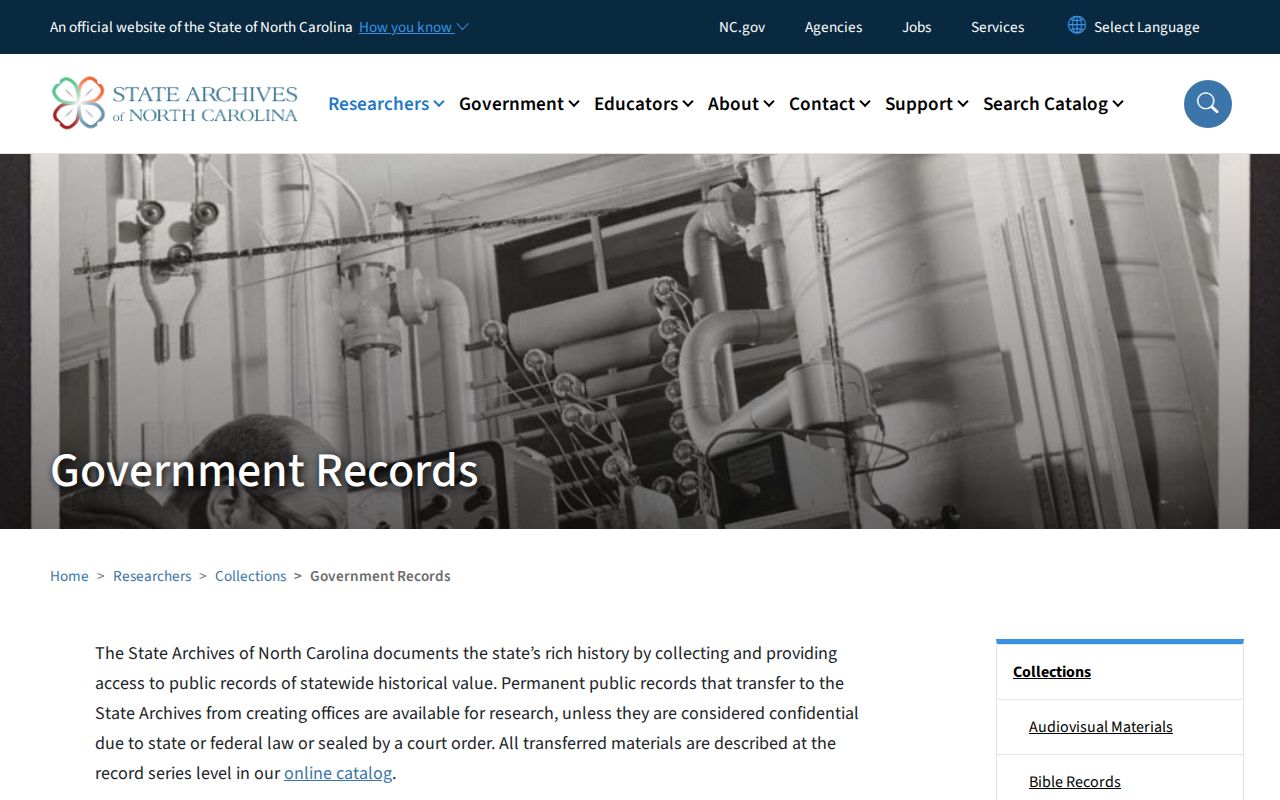
Use the record type, surname variants, county, and date range to narrow an Archives request. A directory listing can provide the time and place needed for that next search, but it is not a substitute for the underlying county record.
The State Archives catalog search guidance shows the available catalog fields and Search Room workflow.
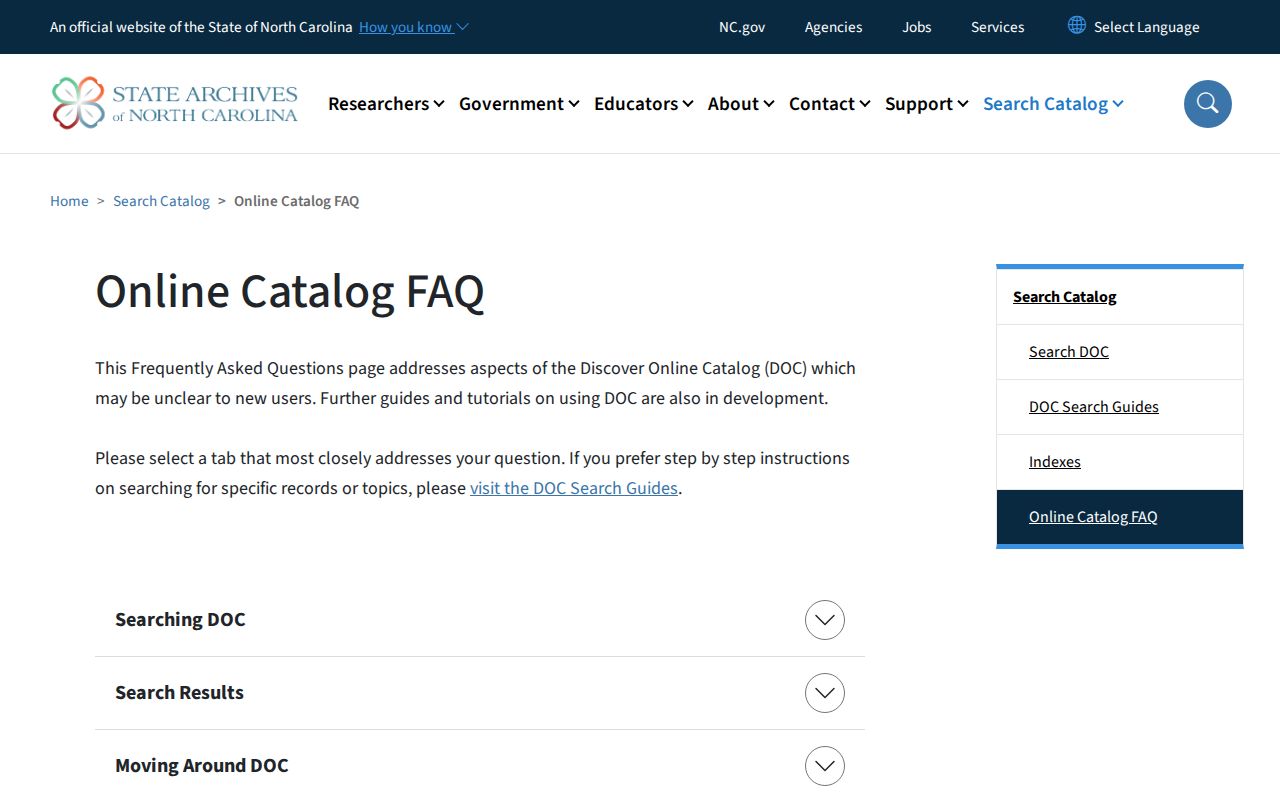
Catalog results identify collections and containers, not a universal name index. A useful request cites the specific series and the directory page that suggested the date or location.
The State Archives copy-request form asks for a subject name, year, county, and pertinent details.
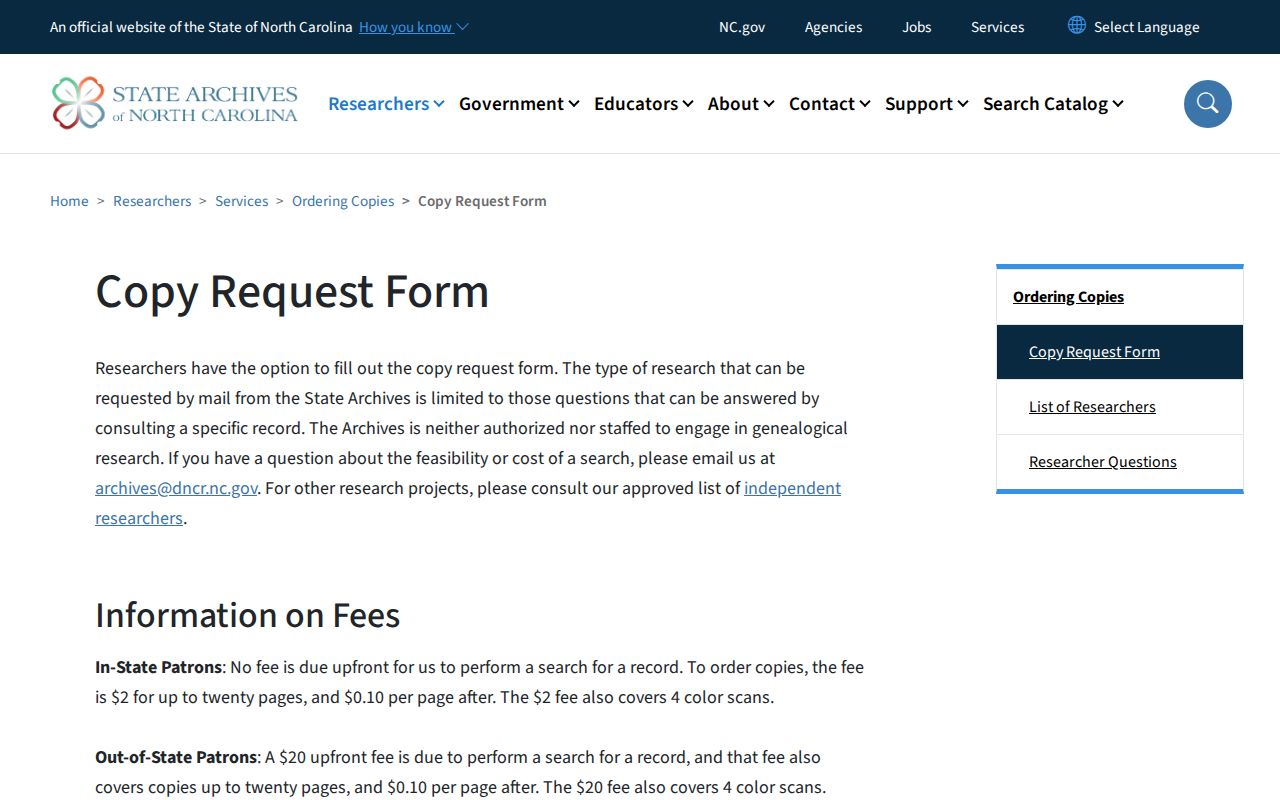
Ask the Archives for search feasibility and a quote when a record is not readily identifiable. The documented routes include the online catalog, the copy form, mail or email as accepted, and the Raleigh Search Room. The accessible form did not state an exact price or processing time.
Note: A catalog result can locate a series, but staff may need more information before a person-specific search is feasible.
Pitt Chronicles for Greenville Families
The Pitt County Historical Society’s Chronicles publications are a strong local-family lead, not a current resident list. Volume I, first issued in 1982 and reprinted in 2003, has 878 pages, about 1,100 Pitt families, and more than 42,000 indexed names. Volume II, issued in 2005, has 1,046 pages, more than 1,200 articles and photos, and more than 33,000 indexed names. A match belongs in a dated research trail and should be tested against a directory, deed, cemetery, newspaper, or Archives record.
The Historical Society’s Chronicles holdings and indexed-name information appear below.
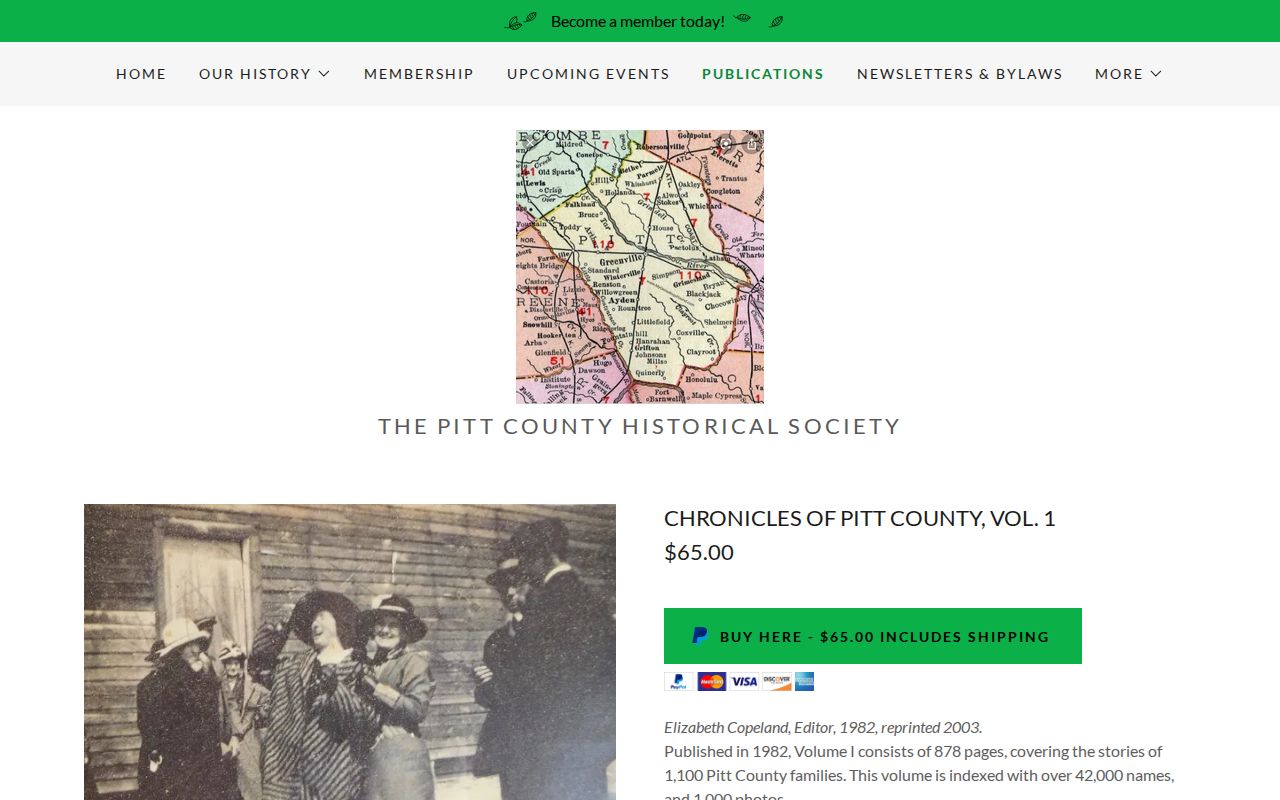
The publication details help identify a cited volume, but an indexed name alone does not establish an address, relationship, or date without the underlying article and independent records.
The Pitt County Historical Society local-history resource is shown below.
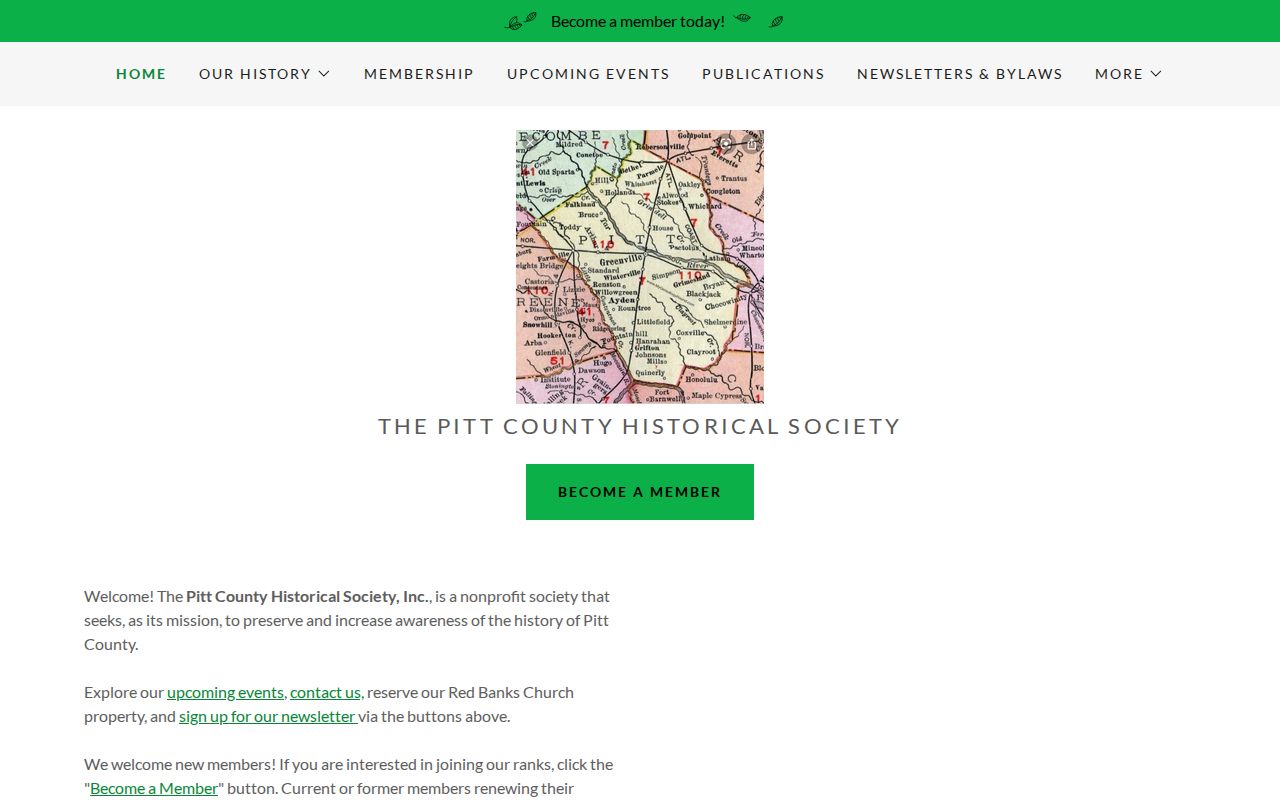
The society’s history says it was organized at the Greenville courthouse on September 18, 1927. Its family, cemetery, and architectural materials can add context to a directory address when each source is cited separately.
Date Greenville Directory Evidence
Use only a publication date that is stated on the volume or its verified record. The timeline does not fill the years between editions. It marks the available volumes and a local research milestone, so a citation can say what was consulted and what remains unknown.
| 1916-17 | Verified Greenville/Pitt directory scan on DigitalNC. |
|---|---|
| 1926-27 | Ernest H. Miller and Commercial Service Co. volume, DigitalNC record 25606. |
| 1930 | Sheppard Memorial Library opened after Harper Donelson Sheppard’s donation. |
| 1940-41 | Verified DigitalNC directory scan with municipal-library and city-facts context. |
| 1942-43 | Verified Southern Directory Company scan on DigitalNC. |
| 1960-61 | Verified Greenville/Pitt directory scan on DigitalNC. |
For a present-day identity question, confirm any historical finding in the appropriate current custodian’s record. A directory is most persuasive when it is one dated point in a chain, not the last word about a Greenville resident.